29 July 2026
Whey Protein and Climbing: How Much Protein Do You Need as a Climber?
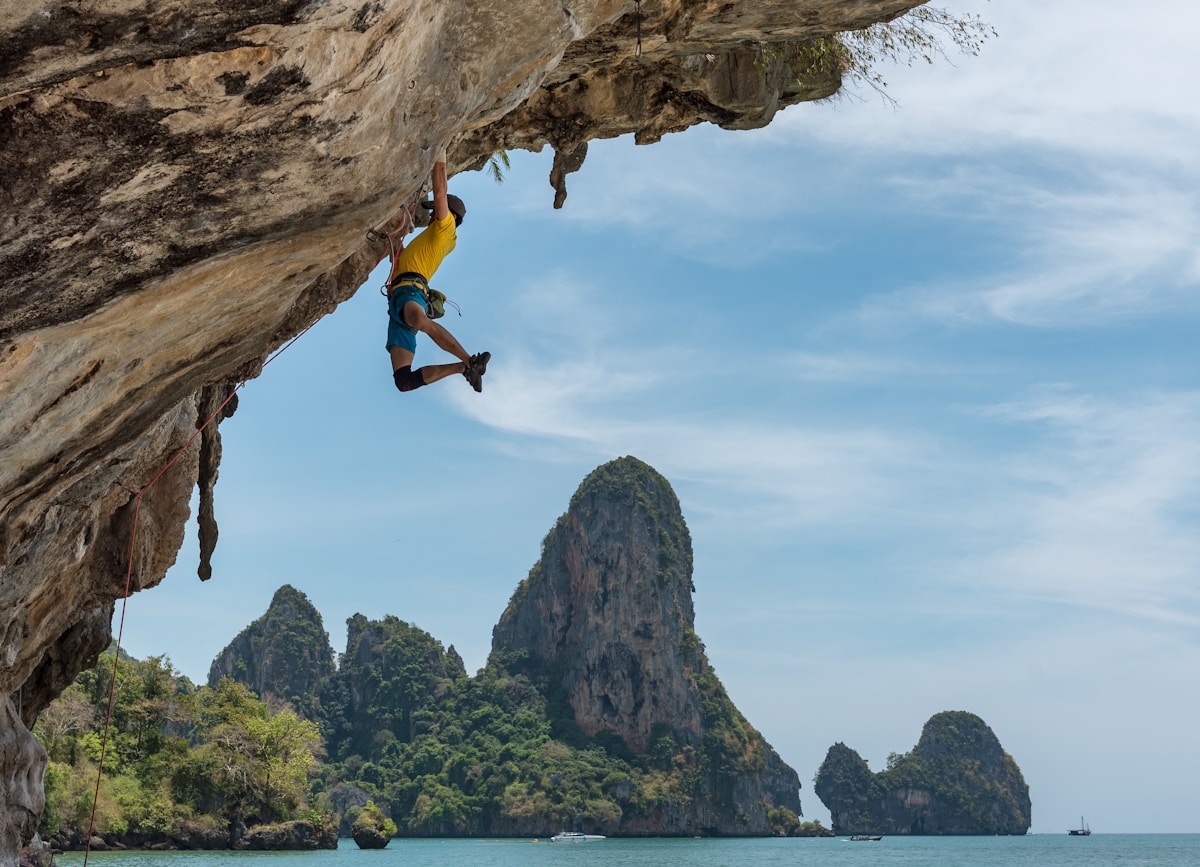
Climbing has quietly become one of the most popular sports in the country. Bouldering gyms are opening everywhere, and anyone who has spent an evening on the wall knows the feeling the next day: sore forearms, tired shoulders and fingers that struggle to open a jar. In this article we take a calm look at what climbing demands from your muscles, how much protein you need as a climber and how whey protein fits into a sport where extra body weight is the enemy.
What climbing demands from your body
Climbing is strength training in disguise. Every move loads your fingers, forearms, shoulders, back and core, often close to their maximum. Steep boulder problems demand explosive pulls, while longer routes ask your grip to keep working under fatigue for minutes at a time. Much of that work is isometric and eccentric, holding positions and lowering under control, exactly the kind of load that causes small tears in muscle fibres and leaves you sore for days.
If you climb two or three times a week, your upper body is in a near constant cycle of damage and repair. Protein delivers the amino acids that drive that repair. With a structurally low intake you recover more slowly between sessions, your grip strength plateaus and small tweaks in fingers and elbows take longer to settle.
How much protein do you need as a climber
For climbers who train a few times a week, 1.4 to 1.8 grams of protein per kilo of body weight per day is a good starting point. If you combine climbing with fingerboard sessions or general strength work, or you are training hard for a project or competition, 1.8 to 2.0 grams per kilo fits the guidelines of the International Society of Sports Nutrition for athletes in intensive training.
For a climber of 70 kilos that comes down to roughly 98 to 140 grams of protein per day. Spread over four meals that is very manageable. Want to know what this means for your own weight and training volume? Work it out in two minutes with the protein calculator.
Protein without unwanted weight gain
Climbers watch their strength to weight ratio closely, and some avoid protein shakes out of fear of bulking up. That fear is misplaced. Muscle growth is driven by training volume and a calorie surplus, not by protein itself. A shake of 25 grams of whey contains around 100 calories, less than most snack bars, and helps you recover without adding meaningful energy. If anything, a higher protein intake helps climbers who want to stay lean, because protein keeps you full and protects muscle when you eat at maintenance or in a small deficit.
Where whey protein fits for climbers
Whey protein will not pull you up the wall, but it solves a practical problem: getting enough protein on days that revolve around training, work and travel. It absorbs quickly, is rich in leucine, the amino acid that triggers muscle repair, and needs nothing more than a shaker and water. Typical moments:
- Straight after an evening bouldering session, when dinner was hours earlier and you only have a small snack before bed
- After a fingerboard or strength workout, as an easy 20 to 30 gram portion
- On outdoor days, when you are at the crag for hours with only bars and fruit in your pack
- At breakfast on rest days, to keep the repair process supplied
When choosing a whey, compare the price per gram of protein rather than the marketing, because differences between brands are large while quality is usually close.
Fingers, tendons and collagen questions
Climbers often ask whether they should take collagen for their tendons and pulleys instead of whey. The honest answer is that the evidence for collagen is still mixed, while the evidence that overall protein intake supports tissue repair is solid. A sensible approach is to get your total protein right first, from food and whey, and treat anything else as optional. Tendons adapt slowly, so patience with training load does more for your fingers than any supplement.
Do not forget the basics
Protein supports recovery, but climbing performance also leans on carbohydrates for long sessions, fluids on hot gym evenings and enough sleep, which is when most repair happens. Whey supplements your diet at the moments a normal meal is impractical, it does not replace real food. A varied diet with enough total energy remains the base.
Conclusion
As a climber you need more protein than the average person, somewhere between 1.4 and 2.0 grams per kilo of body weight per day depending on how often and how hard you train. Spread it over the day, use whey as a practical tool around sessions and outdoor days, and let your strength to weight ratio benefit from better recovery rather than fearing the shake. Curious about your personal number? Work it out in two minutes with the protein calculator.
Sources
- Morton RW, et al. A systematic review, meta analysis and meta regression of the effect of protein supplementation on resistance training induced gains in muscle mass and strength. Br J Sports Med. 2018. PubMed 28698222
- Jaeger R, et al. International Society of Sports Nutrition position stand: protein and exercise. J Int Soc Sports Nutr. 2017. PubMed 28642676
- Tang JE, et al. Ingestion of whey hydrolysate, casein, or soy protein isolate: effects on mixed muscle protein synthesis at rest and following resistance exercise in young men. J Appl Physiol. 2009. PubMed 19589961